


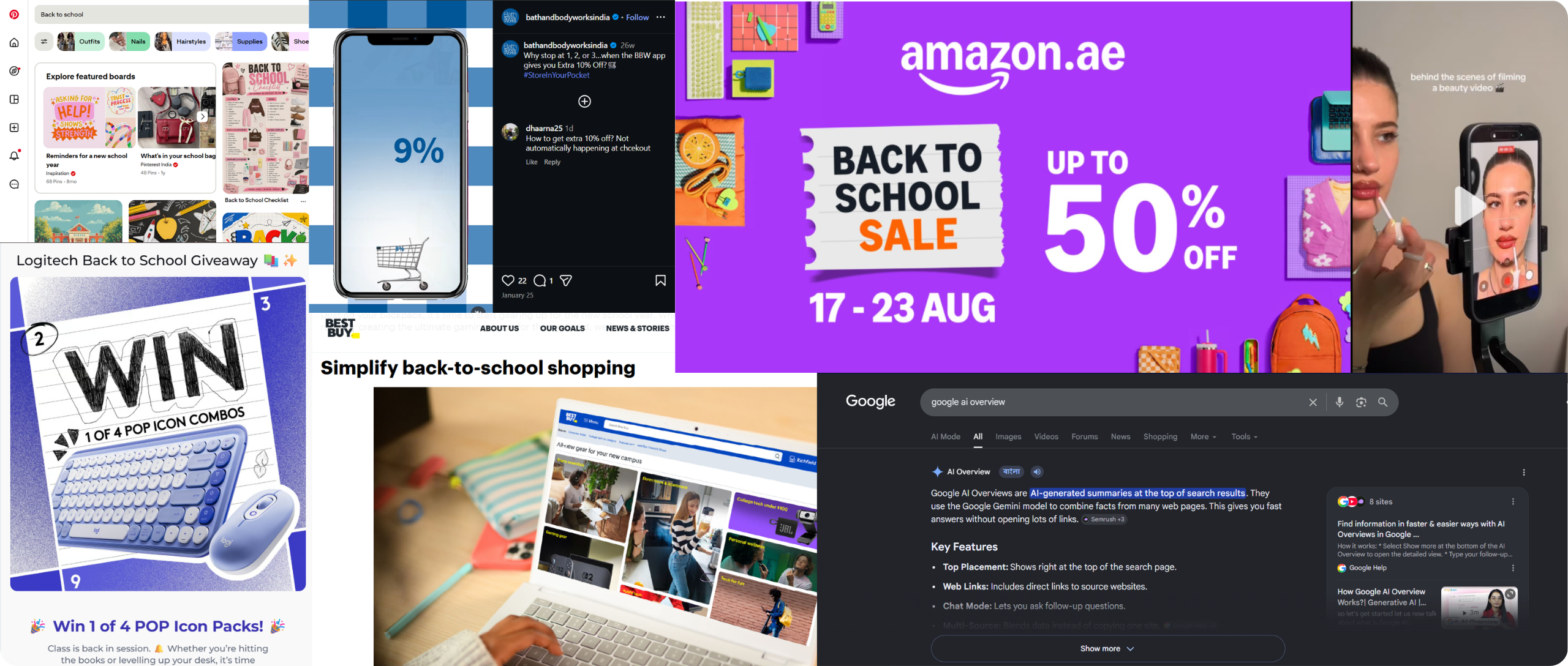
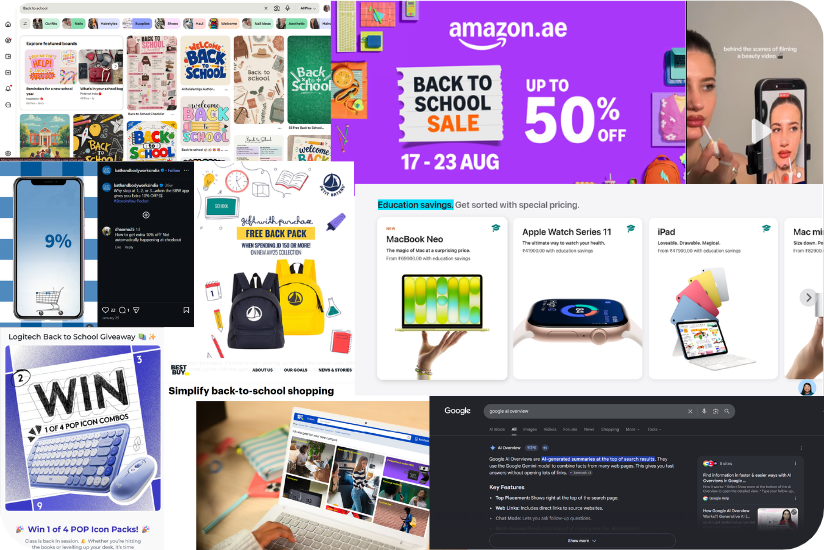
The back-to-school season has become one of the biggest retail and ecommerce opportunities of the year. Beyond school supplies, it now drives spending across fashion, electronics, beauty, healthcare, furniture, food, SaaS, and more. For businesses, the back-to-school campaign is an opportunity to attract new customers, increase sales during Q3 and build momentum before Q4.
Brands that wait until late August are already behind. By then, many shoppers have started researching, comparing products, and making purchases. The strongest campaigns begin months earlier and stay visible throughout the buying journey.
In this guide, you'll discover the biggest back-to-school marketing trends for 2026, when to launch your campaigns, and practical strategies to drive results across every major marketing channel.
Why Back-to-School Is One of the Biggest Revenue Opportunities of Q3
For many businesses, Q3 is the bridge between summer and the busy holiday shopping season. Before Black Friday takes over, back-to-school marketing offers one of the biggest revenue opportunities of the year. Brands that plan early and understand how customers shop during this period are far more likely to stay ahead of the competition.
Back-to-School spending continues to grow every year
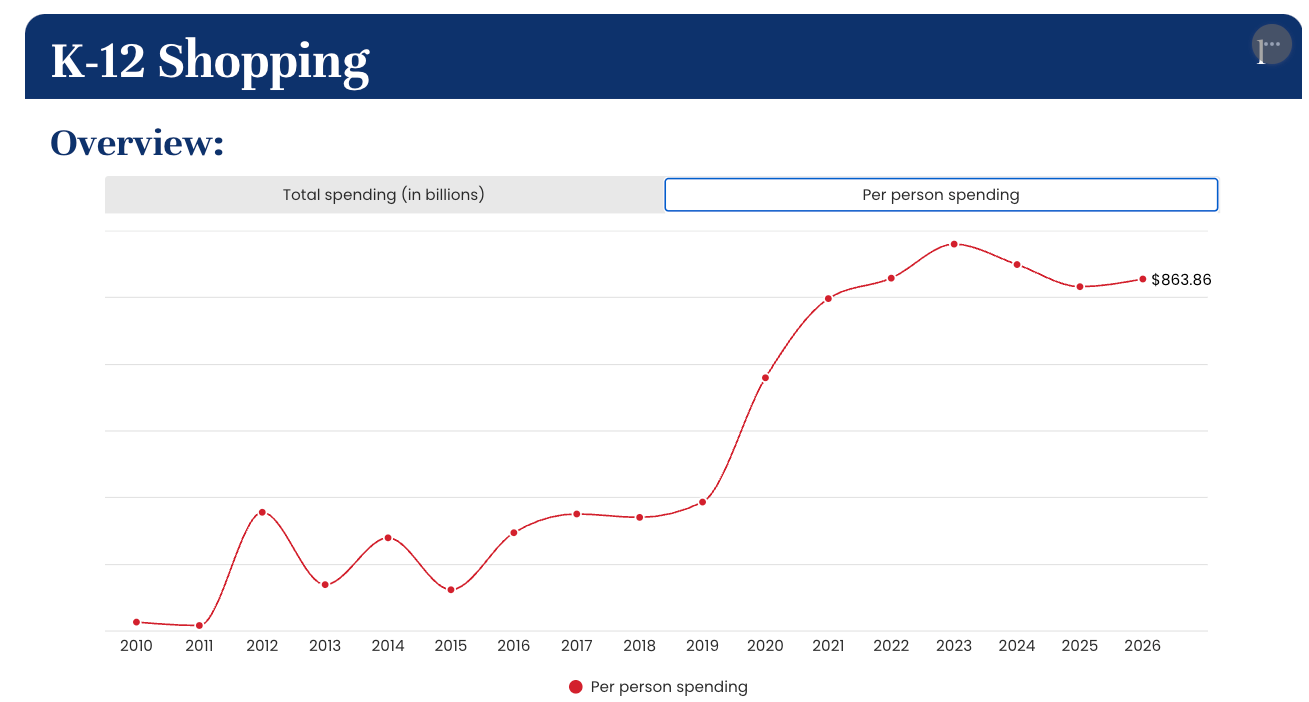
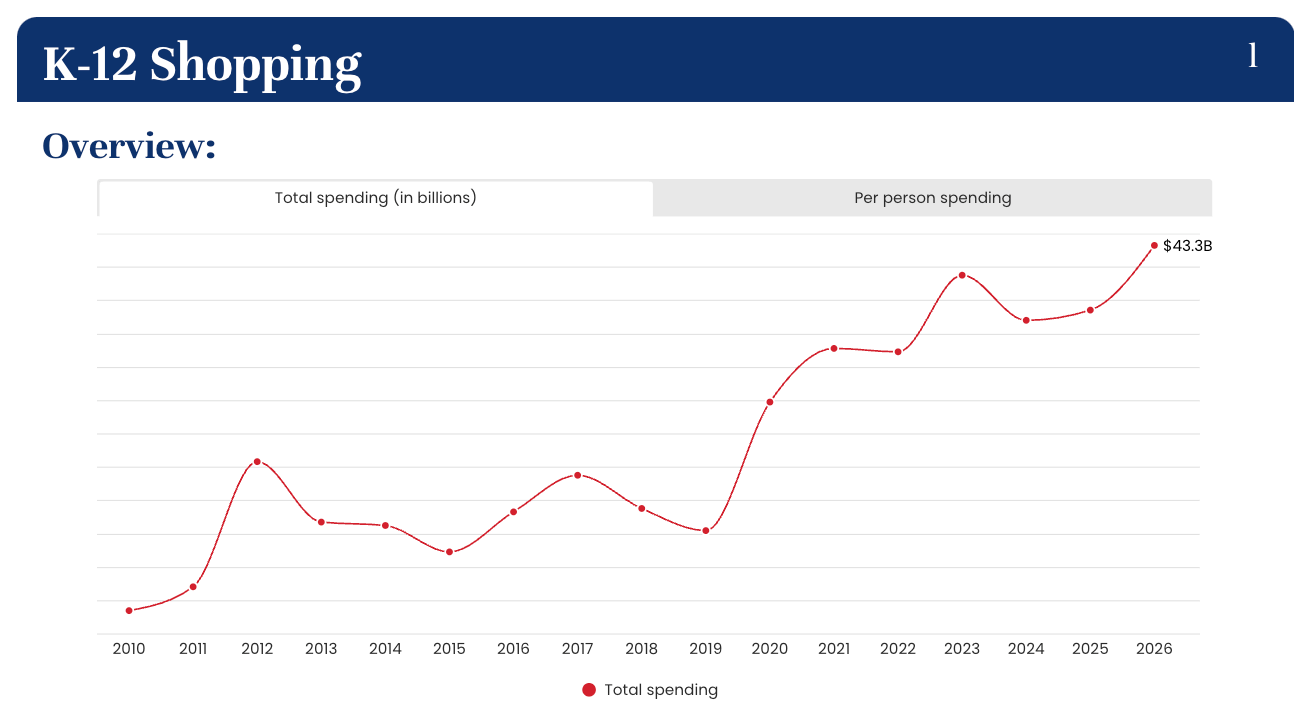
Back-to-school shopping generates billions in sales every year, making it one of the biggest retail seasons after Christmas. According to the National Retail Federation (NRF), families are expected to spend $43.3 billion on back-to-school shopping in 2026, while back-to-college spending is projected to surpass $103.5 billion for the first time, driven largely by electronics, clothing, and footwear.
Why consumers start shopping weeks earlier than brands think
Many brands still assume back-to-school shopping begins in August, but that's no longer the case. Consumers often start researching products as early as June, comparing prices, exploring options, and planning their purchases.
According to NRF research, 62% of shoppers had already purchased back-to-school items by July 2026. Brands that wait until late August to launch their campaigns risk missing some of the most important stages of the customer journey.
Why consumers start shopping weeks earlier than brands think
Many brands still assume back-to-school shopping begins in August, but that's no longer the case. Consumers often start researching products as early as June, comparing prices, exploring options, and planning their purchases.
According to NRF research, 62% of shoppers had already purchased back-to-school items by July 2026. Brands that wait until late August to launch their campaigns risk missing some of the most important stages of the customer journey.
Industries benefiting from Back-to-School campaign
When Should You Start Planning Your Back-to-School Marketing Campaign 2026?
Successful back-to-school marketing campaigns 2026 aren’t built overnight. By the time students begin their shopping, a lot of them have conducted research on products, compared all the prices, and narrowed down their brand selections. Doing all the groundwork beforehand gives you the opportunity to create brand awareness, generate content, optimize campaigns, and maintain visibility. Therefore, having an effective execution plan is essential.
May–June: Research & campaign planning
This is the basis for your campaign. Evaluate last year’s results, study market trends and analyze your target audience. Now is also a great opportunity to think of your budget and devise a plan around which products, promotions, or services you will sell during this campaign.
June: SEO & content production
June is the best month for publishing SEO content ahead of an increase in search demand. Set up landing pages, buying guides, blog posts, product collections, and optimise category pages with pertinent keywords. Starting early gives your content time to be indexed and build visibility before competition peaks.
July: Creative production & audience building
Now that you’ve defined your marketing objectives, it is time to focus on crafting innovative and distinct materials for each of your promotional channels. Develop content for the social media platforms, newsletters, digital ads, videos, and websites. Also, in parallel, create remarketing audiences, grow your email list, and collaborate with creators or influencers before the busiest shopping period begins.
Late July: Campaign launch
By late July, customers will start researching products and making their first few purchases. This is the perfect moment to start your back-to-school marketing campaign on both organic and paid channels (Google Ads, Meta ads, etc.). Be sure to ensure all technical aspects (website, product pages, tracking, marketing automation) of your campaign are in working order prior to increasing traffic.
August: Scale advertising
August is generally regarded as the peak month of the season. Increase the budgets of your successful campaigns while watching results and improve creatives, audiences, and bid strategy. Make sure to keep your messaging relevant and that you can provide inventory and customer service in the higher demand period.
September: Retargeting & last-minute shoppers
Not everyone buys everything before school begins. September offers another chance to target last-minute shoppers as well as cart abandoners. Focus on remarketing, personalized emails, limited-time offers, and upselling.
CTA
Need help with your back-to-school campaign?
Partner with Infini Digital to build a winning strategy, launch high-performing campaigns, and manage everything from A to Z. Let's turn seasonal demand into measurable growth.
Understanding the Back-to-School Customer Journey and Key Audiences
One of the biggest mistakes brands make is treating everyone as the same customer (!!!). Parents, students, teachers, and educational institutions all have different needs, buying behaviours, and decision-making processes. We've done the hard work for you. Here are a few high-intent audiences you can use immediately for your back-to-school Meta Ads.
Parents: The Primary Decision-Makers
Typical purchases
- School uniforms and children's clothing
- Shoes and backpacks
- School supplies
- Laptops and tablets
- Lunch boxes and water bottles
- Vitamins and healthcare essentials
Needs and motivations
- Value for money
- Durable, high-quality products
- Convenient shopping experience
- Trusted brands and positive reviews
Pain points
- Rising education costs
- Limited time to shop
- Comparing multiple products and prices
- Finding everything in one place
Preferred marketing channels
- Google Search
- Email marketing
- Google Shopping
School Students: Influencing Household Purchases
Typical purchases
- Backpacks
- Trainers and sportswear
- Stationery
- Gadgets and accessories
- Water bottles
- Personal care products
Needs and motivations
- Self-expression
- Popular brands and trends
- Products recommended by friends or creators
- Stylish yet practical options
Pain points
- Limited personal budget
- Peer pressure
- Too many choices
Preferred marketing channels
- TikTok
- Instagram Reels
- YouTube
- Snapchat
- Influencer content
Teachers: Investing in Their Classrooms
Typical purchases
- Classroom supplies
- Books and teaching materials
- Educational software
- Storage and organisation products
- Office supplies
- Printing services
Needs and motivations
- Reliable products
- Time-saving solutions
- Budget-friendly pricing
- Educational value
Pain points
- Limited classroom budgets
- Lack of time
- Finding quality resources within budget
Preferred marketing channels
- Google Search
- Facebook Groups
- Email newsletters
- Educational communities
University Students: Building an Independent Lifestyle
Typical purchases
- Laptops and tablets
- Dorm furniture
- Bedding
- Kitchen essentials
- Productivity software
- Headphones and tech accessories
Needs and motivations
- Affordable solutions
- Multi-purpose products
- Independence
- Productivity and organisation
Pain points
- Tight budgets
- Moving into new accommodation
- Choosing products that offer long-term value
Preferred marketing channels
- TikTok
- YouTube
- Google Search
- Student influencer content
Young Professionals: Preparing for a New Academic or Career Chapter
Typical purchases
- Online courses
- Productivity software
- Office furniture
- Laptops and accessories
- Business backpacks
- Career coaching
Needs and motivations
- Career advancement
- Skill development
- Better organisation
- Professional image
Pain points
- Balancing work and study
- Budget constraints
- Finding trusted learning resources
Preferred marketing channels
- Google Search
- Email marketing
- YouTube
- Professional newsletters
Schools, Colleges and Educational Institutions: B2B Purchasing Opportunities
Typical purchases
- Software licences
- Furniture
- Office supplies
- IT equipment
- Cleaning services
- Catering
- Security systems
- Marketing services
- Printing
- Educational technology
In contrast to the consumer purchase process, institutional buying requires many people to participate in a decision, and sales processes can take a long time. This is the rationale behind the suitability of using Google Search, LinkedIn, targeted email campaigns, and account-based marketing (ABM). For B2B marketers, back-to-school marketing is a chance to reach qualified leads and solidify their relationships with educational institutions.
10 Marketing Trends Every Brand Should Know Before Back-to-School 2026
AI-powered personalisation
Customers today don’t want the same experience as everyone else. They want recommendations that are relevant to them. Artificial Intelligence enables brands to do personalization of product recommendations, email suggestions, website content, and promotions according to individual browsing behavior and past shopping behaviour. When customers see products that genuinely match their needs, they're far more likely to buy.
Short-form video
People don't always want to read about a product anymore. They want to see it in action. A quick 30-second video showing how a backpack fits everything a student needs or how a desk can transform a study space often has a much bigger impact than a static image. The back-to-school season presents many quick ways to attain the attention of the public and trigger sales through short videos.
UGC creators outperforming polished ads
Perfectly made commercials still have importance in the market but do not promote trust in the same way that ordinary people do. Sharing genuine reviews by parents, students, and the users allows to make the products seem more original and relatable. Therefore, gaining consumers’ trust through user-generated content is a successful strategy for many brands.
Social search
More consumers are utilizing TikTok, Instagram, Pinterest, and YouTube for ideas or product suggestions. They now want to see the product in action or to determine its potential before going to the store. The creation of materials that answers these questions allows brands to reach consumers earlier in their shopping funnels.
Micro-influencers
A large audience doesn't equal success. Micro-influencers may have a smaller audience but their audience is more engaged and trusts them more. For some brands, working with several small influencers may yield better engagement results than working with one superstar influencer.
Interactive quizzes
Back-to-school shopping usually requires a lot of decision-making. Which laptop is the best? Which backpack works? Which skincare routine is right for a teenager? Interactive quizzes can ease the process. They will help buyers to choose a product while offering them fun.
Bundles instead of discounts
Discounts can attract attention but they are not the only way to offer value. More and more brands offer packages that include complementary products allowing customers to finish their errands in one visit. This strategy allows the company to raise its average order value and can be considered as a smarter choice for customers.
First-party data
With online privacy being part of a constant evolution of sorts, it means that brands can no longer depend on third-party data to the same extent as they did before. You can build your audience by creating email subscribers, loyalty programs, quizzes, and interactions through the web, which would give you an upper edge over others.
Retail media
The decision to purchase often comes after the consumers roam through different online marketplaces and websites. Therefore the importance of retail media should be obvious as it gives brands a chance to be present in the locations where their potential customers are looking to purchase products.
Zero-click search & AI Overviews
Search has changed drastically. Nowadays, people get answers directly from Google and AI-powered search engines without having to visit a number of various sites. As a result, brands should start focusing not only on the search ranks but on the development of really valuable content that provides the answers to the questions.
CTA
Want to improve your AI visibility with GEO and AEO?
You're in the right place. At Infini Digital, we help brands optimize their visibility across AI-powered search and answer engines. Get in touch today for a free AI visibility audit.
Building Your 2026 Back-to-School Marketing Strategy
Many back-to-school marketing campaigns fail because brands treat each channel as a separate activity. They run Meta Ads, send emails, publish blogs, and hope everything works together. The best campaigns follow a connected strategy where every channel supports the next stage of the customer journey.
Instead of asking which is better, SEO or paid ads, consider how each channel moves customers toward the point of purchase. Some channels build awareness, others capture demand, drive conversions, or encourage repeat purchases. When they work together, the results are much stronger.
This is how we do it at Infini Digital. We assist businesses in developing integrated marketing strategies that lead customers from discovery to purchase rather than creating one-off campaigns.
Step 1: Build awareness
Platforms such as Meta and TikTok and collaborations with influencers should be utilized to launch new products, provide informative materials, and inspire potential customers. For instance, a parent browsing Instagram may find ideas for preparing school lunches, whereas a computer science major may save a Pinterest pin with ideas for arranging a dorm room much before purchasing. Overall, the goal is simple: to ensure that potential buyers know the brand long before they start purchasing.
Step 2: Capture demand
Google Ads along with SEO, Google Shopping and good landing pages can help a business show up where customers are comparing products. When someone searches for “best laptop for college students” or “back-to-school must-haves,” this means the brand has the right content to help and guide the consumer buying process.
Step 3: Convert visitors
Remarketing campaigns are useful for reminding customers of the merchandise they looked at previously while email marketing is good for making up for lost carts while helping consumers with uncertainty. Limited discounts, product bundles, testimonials, and ratings promote and encourage purchases.
Step 4: Increase average order value
You can achieve extra payments by selling complementary products and suggesting customer experience features as well. For instance, if someone buys a lap-top, he or she is likely to need a backpack, a wireless mouse, and an extended guarantee.
Step 5: Retain customers
Email marketing is very good at engaging clients long after the back-to-school season ends. A good experience can lead to repeated purchases soon during the 11.11 Single’s Day campaign, Black Friday and Christmas sales.
Back-to-School 2026: Marketing Strategies by Channel
AI SEO, GEO & AEO
Unlike paid ads, AI visibility cannot be achieved overnight. When consumers start asking ChatGPT, Gemini or Google's AI Overviews where to find the best back-to-school deals, these platforms don't choose content at random. The AI platforms rely on sources they already trust. Businesses that invest early in AI SEO, Generative Engine Optimisation (GEO) and Answer Engine Optimisation (AEO) significantly increase their chances of being cited and recommended in AI-generated responses. The brands that wait until August are often too late to earn that visibility.
Why it matters during Back-to-School
The majority of consumers don't purchase the first product they come across. They analyze and compare their choices by reading guides and reviews before making their purchasing decisions. If your content is already published by the time they carry out this research stage, it can help you earn their trust even before they start comparing prices.
Why it matters during Back-to-School
The majority of consumers don't purchase the first product they come across. They analyze and compare their choices by reading guides and reviews before making their purchasing decisions. If your content is already published by the time they carry out this research stage, it can help you earn their trust even before they start comparing prices.
Best content formats
The most popular types of online content are buying guides, product comparisons, checklists, FAQs, category pages, and "best of..." content formats since these types of materials provide answers to users' questions.
Technical SEO & AI SEO checklist
- Publish pages and buying guides early
- Optimise titles, meta descriptions and heading structure
- Improve page speed and Core Web Vitals
- Add strong internal links between related content
- Use structured data (Schema.org) wherever relevant
- Make sure every page is fully mobile-friendly
- Create content that directly answers common customer questions
- Structure content with clear headings, lists and concise answers for AI readability
- Build topical authority with comprehensive, interconnected content
- Earn high-quality mentions and backlinks to increase your chances of being cited by AI search engines.
Common mistakes
One of the major errors that brands make is the posting of rolling seasonal information late. The second error is making generic pages that focus on large keywords but do not assess what the buyers are really interested in knowing.
KPIs
Check organic traffic, keyword location, and CTR, conversion rate, and revenue to gain an understanding of what is causing the results.
Real example
Each year, Staples creates back-to-school shopping advisors and category pages long before the shopping period begins. Due to answering common questions early, they manage to gather organic traffic while many competitors are still waiting for their physical sales to begin.
Google Ads
Google Ads enables you to connect with those who are already actively looking for different products or services in the market. Campaigns must focus on high intent keywords, Shopping Ads, and specific landing pages that help prospects with making their purchases during the back-to-school period.
KPIs: CTR, CPA, ROAS, Conversions
Real example: Google Shopping campaigns allow retailers to appear when shoppers search for terms like school backpacks or best laptops for students.
Meta Ads
Meta is suitable for raising awareness. Utilize video ads, Reels, carousel ads, and remarketing to stay present during the shopping process
KPIs: Reach, Engagement, CPC, ROAS
Real example: Nike regularly uses Instagram and Facebook to promote its back-to-school collections through lifestyle-focused campaigns.
Email marketing
Email keeps brands in touch with customers long after they leave the site. Product recommendations, shopping cart abandonment notifications, and last-minute discounts help convert interest into purchases.
KPIs: Open rate, Click rate, Revenue, Conversions
Real example: Notion promotes student offers and productivity templates through targeted email campaigns.
Influencer marketing
People trust recommendations from creators they follow. Get in touch with influencers whose audience suits your target audience and offer genuine product reviews, shopping hauls, or everyday life routines.
KPIs: Reach, Engagement, Sales, ROI
Real example: Cotton On regularly collaborates with lifestyle creators to showcase back-to-school fashion.
Organic Social
Organic content also keeps your brand in sight for all the time. Post tips, behind-the-scenes photos, customer stories, and product ideas rather than simply posting promotional posts.
KPIs: Reach, Engagement, Website clicks
Real example: IKEA shares study space and dorm room inspiration that naturally features its products.
Pinterest serves as many shoppers’ planning platforms before making any purchases. Optimized Pins, buying guides, and idea boards help in bringing traffic long after posting.
KPIs: Impressions, Saves, Clicks
Real example: IKEA's study room and organisation boards remain popular throughout the back-to-school season.
TikTok
TikTok has become a major product discovery platform, especially for students. Various shopping haul videos, product descriptions and creator collaborations ensure the good interest rate.
KPIs: Views, Engagement, Website visits
Real example: Duolingo uses entertaining short-form videos to stay relevant with younger audiences.
B2B companies can take advantage of LinkedIn, which is a great tool for reaching out to schools, educational institutions and decision-makers. Posting case studies, educational materials, as well as leadership content will help build credibility.
KPIs: Leads, Cost per lead, Demo requests
Real example: Microsoft regularly shares education-focused resources and solutions on LinkedIn.
SMS Marketing
SMS is the best choice for sending time-critical messages, for example, flash sales and cart reminders.
KPIs: Click rate, Conversions, Revenue
Real example: Many retail brands use SMS to promote limited-time back-to-school offers.
Affiliate Marketing
Affiliate marketing allows reaching new potential clients through trustworthy publishers and bloggers. This method works when connecting customers and brands through buying guides or product reviews.
KPIs: Affiliate sales, Conversion rate, ROI
Real example: Amazon Associates enables creators and publishers to recommend back-to-school products through reviews and curated shopping guides.
20 Winning 2026 Back-to-School Campaign Ideas
An effective back-to-school marketing campaign 2026 is not complicated to design. The most successful campaigns satisfy an existing customers’ requirement, create a sense of urgency, and simplify the buying process. Here are 20 successful advertising strategies used by various organizations as examples.
1. Build Your Own Bundle
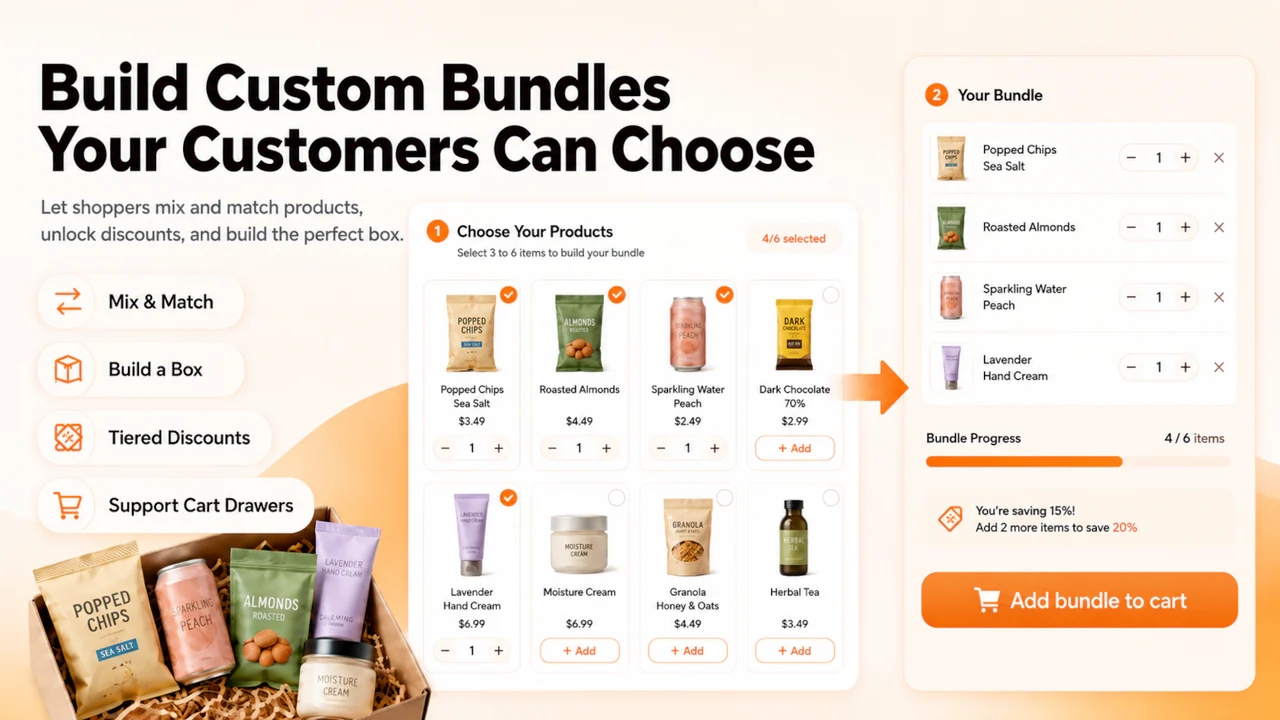
Source: Build your own bundle Shopify

%20What%20is%20lead%20scoring%20tool%20in%20HubSpot%20and%20how%20to%20use%20it%20in%202026.png)


.webp)
.webp)
.webp)